One of my father's patients, a Hungarian Jew named Mr. Karas, came to my father after Passover and said, "Guess who came to our seder this year?"
The story went as follows: In the early years of the war, a young couple, cousins of his, managed with difficulty to get three tickets out of Hungary to Vladivostok--two for themselves, one for their baby. It took scrimping on everything else; it took all their funds But before they could get on the train, the young husband dropped dead, and his wife was left without money and alone.
She had no time to mourn. She took two of the tickets and got herself and their son on the train, and kind passengers fed her enough from their supplies so that she could nurse the baby. But without a husband, without even a small coin, and without knowledge of the languages of the countries she was travelling through, she was desperate.
She got as far as Japan--a Hungarian Jew--but there, emaciated and ill, she dropped dead in the street, her baby in her arms. The Japanese authorities found her there, and brought her son to a Catholic mission. He was a bright boy, studied theology and the classical languages, and did well, going higher and higher in the Catholic hierarchy.
But he was always curious about his origins. He had his mother's name on what was left behind, and finally he was able to trace his mother back to Hungary, and to track down other branches of the family. He found that he was a Karas, and that there was a branch of the family in Montreal.
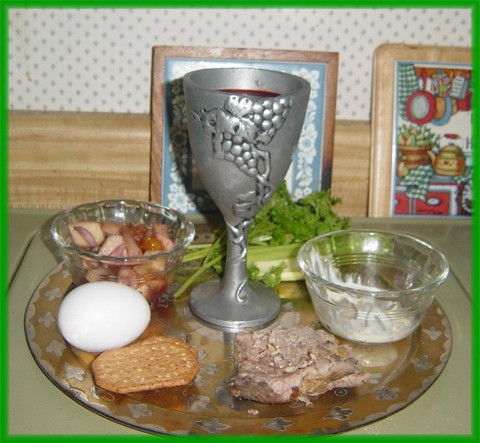
And that was how, on the first night of Passover, Mr. Karas answered the doorbell and found the Cardinal of Tokyo on his doorstep, dressed in a cardinal's scarlet regalia. "Happy Passover. I am your cousin," said the cardinal. And he sat down at the seder table and took part in the service--for as a cardinal, he knew his Hebrew as well as he knew his Latin and Greek. And a stranger came home.
|